Titan Edge / Research
Macro
Commodities Markets: Risk, Return, and Volatility in Commodities Markets
Commodities market acts as another way to finance the world and serves as an anchor for the world economy.
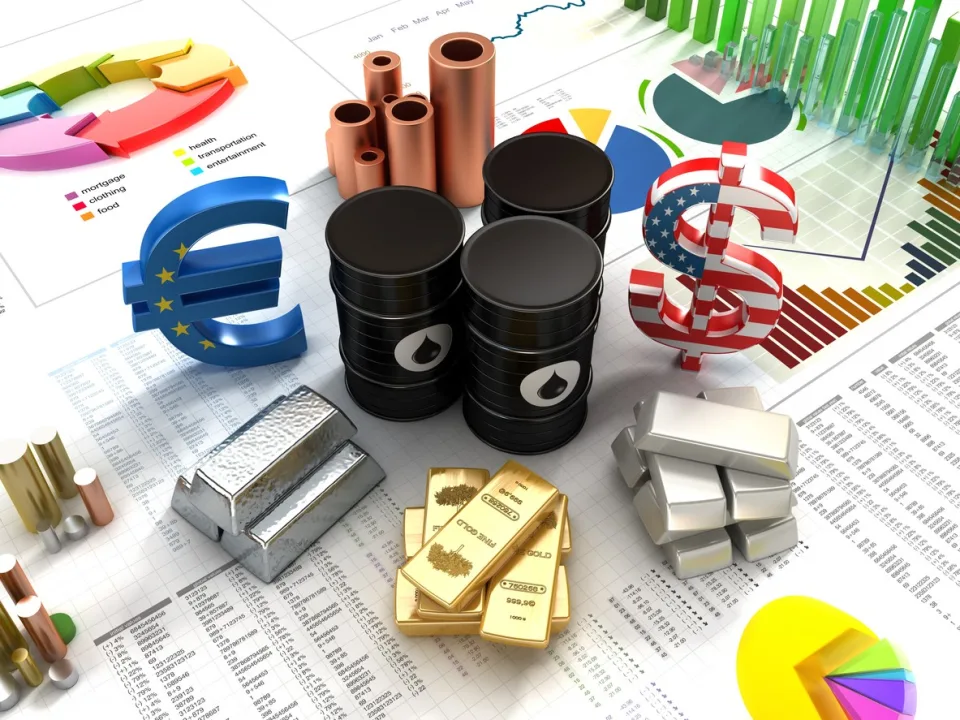
The most common idea that comes to our mind when we hear the word commodities is the buying and selling of basic goods or raw materials such as gold, silver, oil, farm inputs, and industrial metals. Commodities are not just a means to diversify or hedge inflation but also a speculative opportunity for an investor, as every financial instrument has risks, returns, and volatilities that need to be understood before investing. However, very few investors study the risk, return, and volatility patterns of the commodities market, though they must know how to sail through both good and bad times.
Understanding Commodities Markets
The commodities market is generally divided into types:
Hard Commodities: Natural resources that must be mined or extracted, like crude oil, gold, silver, or industrial metals.
Soft Commodities: Agricultural products or livestock that are grown or reared, such as grain, coffee, cotton, and cattle.
The commodities market is actively traded through futures contract, the spot market, and exchange-traded funds (ETFs). Investors routinely hedge against the fluctuation of commodity prices by taking a strategic position in futures contracts agreeing to buy or sell at a specific price at a set date in the future.
Risk Factors in Commodities Markets
1. Price Volatility
Commodity markets are highly volatile by nature because they are deeply influenced by supply and demand shocks, global geopolitics, extreme weather, and macroeconomic cycles. For example, in the crude oil markets, when OPEC announces production cuts or increases, or when a sudden geopolitical crisis emerges in oil-producing nations, crude prices can rapidly drop or jump.
2. Market Speculation
Because commodities trading is frequently driven by speculation from hedge funds, institutional investors, and retail traders, the market can experience amplified, sharp price fluctuations. This speculative activity can occasionally result in localized asset bubbles or sudden market crashes.
3. Geopolitical and Environmental Risks
Commodity availability is explicitly bound to natural disasters, trade wars, international sanctions, and protectionist government policies. For instance, unilateral government actions that restrict the export of agricultural commodities can quickly trigger international shortages and soaring prices.
4. Inflation and Currency Risk
While commodities generally act as an excellent hedge against inflation, they are highly sensitive to shifts in foreign exchange rates. When currency exchange values fluctuate sharply, it can sap liquidity from emerging economies, causing severe domestic pricing distortions.
Return on Investment (ROI) in Commodities
Commodities can act as a solid return generator based on supply-demand fundamentals and the macroeconomic forces that underpin them. Its return profile is vastly different from traditional stock or bond instruments:
- Gold & Precious Metals: Typically exhibit steadier performance and serve as a critical safe-haven asset during times of global economic or political uncertainty.
- Oil & Energy Products: Offer highly dynamic but delicate return profiles that remain unstable due to constant geopolitical friction and production variables.
- Agricultural Commodities: Outperformance is highly cyclical and depends heavily on seasonal weather outlooks, trade policy adjustments, and global supply chain logistics.
Volatility in Commodities Markets
Commodity prices can be extremely unstable, largely driven by three factors:
- Supply Chain Disruption: Major global disruptions (such as the COVID-19 pandemic severely locking down the transportation sector and crushing crude oil demand).
- Technological Improvements: Structural shifts or infrastructure advancements altering the base efficiency and cost of production.
- Market Sentiment: Sudden swings derived from speculative institutional positioning and forward-looking macroeconomic forecasts.
- Historical Milestone: During the 2020 market crash, crude oil futures briefly plunged into negative territory due to massive oversupply and a total freeze in global demand during the pandemic lockdowns. This unprecedented event set an absolute record for short-term volatility in modern commodity markets.
Case Study: Agricultural Commodities and Climate Change
Agricultural commodities are uniquely sensitive to environmental shocks and structural climate variations. The massive 2012 drought in the United States devastated domestic corn and soy crops across the Midwest.
Over a matter of months, corn prices nearly doubled, sending inflationary shockwaves through the global food supply chain and shifting long-term consumer price expectations. This historical event illustrates how stark environmental shocks generate massive structural dislocations in commodity pricing, underscoring why robust risk management tools are an absolute necessity for modern investors.
Conclusion
Commodities trading can serve as a highly profitable investment strategy, but it requires navigating an intricate web of risk and structural unpredictability. It is far from a predictable market; only investors who maintain a rigorous awareness of market supply dynamics, geopolitical developments, and broader macroeconomic shifts can reliably capture long-term returns. Prudent diversification and disciplined hedging remain the best paths to simplifying an otherwise turbulent market.
Works Cited
- Baffes, J., & Nagle, P. (2020). The Impact of Oil Prices on Global Markets. World Bank Research Observer. Based on research from the World Bank Group Prospects Group.
- Gorton, G., & Rouwenhorst, G. (2006). Facts and Fantasies about Commodity Futures. Financial Analysts Journal.
- Hamilton, J. D. (2013). Oil Prices and Stock Market Volatility. Journal of Economic Perspectives.
- Irwin, S. H., & Sanders, D. R. (2011). Index Funds, Financialization, and Commodity Futures Markets. Applied Economic Perspectives and Policy.
- Kilian, L. (2009). Not All Oil Price Shocks Are Alike: Disentangling Demand and Supply Shocks in the Crude Oil Market. American Economic Review, 99(3), 1053–69. Available via the American Economic Association.
- Pindyck, R. S. (2004). Volatility and Commodity Price Dynamics. Journal of Futures Markets, 24(11), 1029-1047. Available via the Wiley Online Library.
Titan Edge publishes technical research for informational purposes only. Nothing on this site is investment advice or a recommendation to buy or sell any security.