Titan Edge / Research
Macro
Interest Rate Fluctuations and Their Impact on Stock Markets
Interest rate is the core of finance, it influences investments, corporate incomes and how quickly the economy grows. The key previous periods of interest rate trends provide invaluable insight into the stock market performance at times of monetary policy shifts. Nowhere are interest rates and stock market performance seem covered so closely as here in this article by the writer highlighting the major previous periods and the impact that interest rates have on the investments.
Historical Overview of Interest Rate Trends
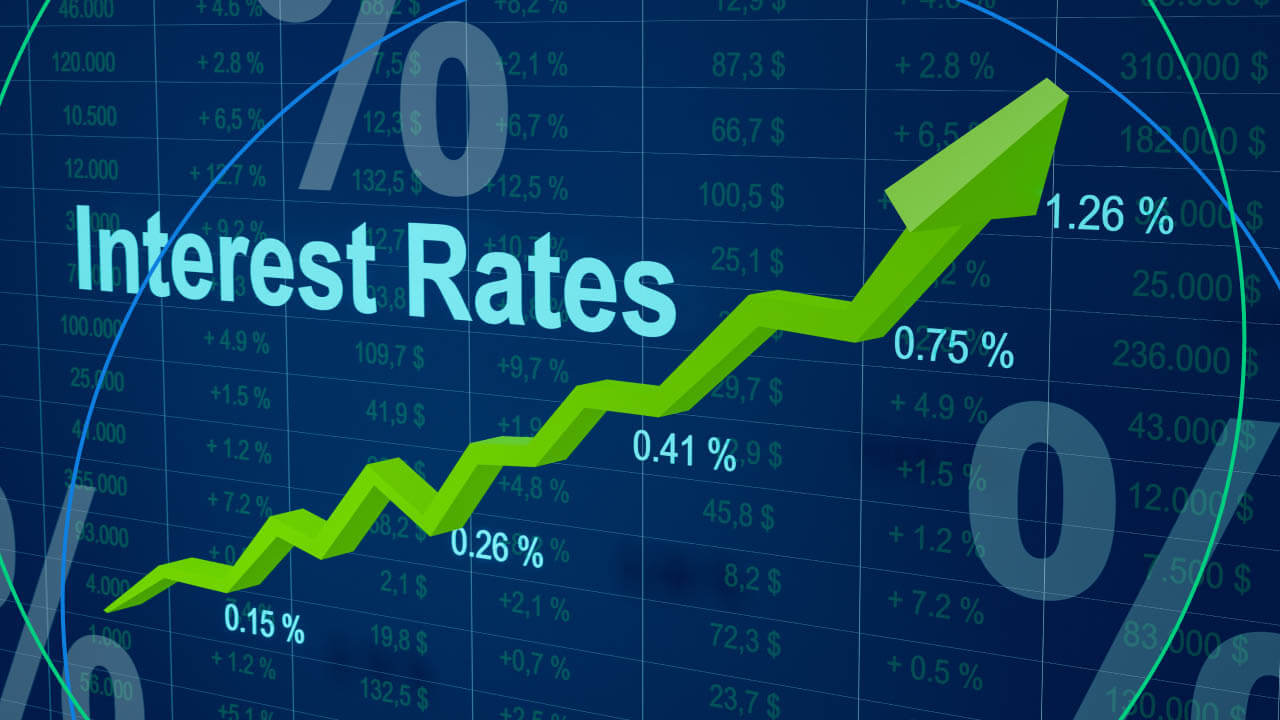
Over the past 100 years, worldwide interest rates have seen dramatic shifts as a result of economic policy, inflation incentives, and financial crises. Major historical examples include:
- 1980s: The Federal Reserve Board led by chairman Paul Volcker increased rates to fight inflation, which hit 20% in 1981. It caused a temporary slowdown of the economy and some stock-market upheaval.
- 2000s: The dot-com bubble burst and fell into a downturn, pushing the Federal Reserve to implement monetary easing. This resulted in interest rates falling to record lows, driving the growth of equity markets.
- 2008 Crisis: When the Fed lowered interest rates to zero, stocks went into a secular bull market as an attempt to support the markets.
- 2020 COVID-19 Pandemic: Interest rates decreased to record lows worldwide by central banks due to an economic slowdown, which had an essential effect on stock prices.
Impact on Stock Markets
1. Equity Valuations and Cost of Capital
An increase in the interest rate means a higher cost of credit (e.g., higher cost of capital and higher discount rates in stock calculations). As a result, stock prices will move downward and negatively impact growth, especially in sectors driven by additional funding sources.
2. Sectoral Performance
Different sectors react to interest rate adjustments in a diverse manner:
- Financial Sector: Banks and financial institutions gain from higher net interest margins when interest rates rise.
- Growth and Technology Stocks: There is an inverse relationship between a rise in the discount rate and the present value of future returns, which negatively impacts growth stocks.
- Consumer Discretionary Stocks: High rates are insidious to consumer spending, adding a financial penalty to retailers and automotive companies.
3. Investor Behavior and Market Volatility
History has seen rapid rate hikes cause a stock market realignment as investors flee to fixed-income paper. Conversely, lower interest rates induce risk-taking, which is one of the primary factors driving stock market bull runs.
Case Study: 2008 Financial Crisis
The 2008 financial crisis was one of the worst recessions in generations, resulting from the housing bubble and lenders' excess risk-taking. During the years prior to the 2008 crisis, the Federal Reserve maintained low interest rates, which encouraged high-risk borrowing and speculation, particularly in mortgage-backed securities.
As the crisis developed, the Fed responded with aggressive measures, slashing interest rates to nearly zero in an attempt to prop up the markets.
Cheap money can help fuel economic growth, but it can also lead to bubbles and economic meltdowns when investors overspend and the overall economy overheats. As the 2008 crisis proved, interest rates are a powerful market force.
Short-Term and Long-Term Impacts
- Liquidity Influx: A gush of liquidity flooded into the market as central banks made cash available to troubled financial institutions.
- Market Collapse: A 50% drop in the broad stock market (S&P 500) occurred in less than a year, collapsing nearly 50 percent from its 2007 high.
- Prolonged Recovery: Easy interest rates eventually allowed corporations to refinance, stimulated consumer spending, and birthed a lengthy bull market that persisted for well over 10 years.
Throughout the crisis, the Federal Reserve's monetary policy response illustrated how easing during and after a disaster can soften the recovery process.
Conclusion
Based on historical data, there is a direct link between interest rate movements and stock market performance. Although declining rates usually buoy stocks, jolting interest rate increases can wreak havoc. With a firm understanding of these trends, investors can make solid decisions amidst the ups and downs of economic cycles.
Works Cited
- Fama, E. F., & French, K. R. (1993). Common risk factors in the returns on stocks and bonds. Journal of Financial Economics, 33(1), 3-56.
- Bernanke, B. S., & Gertler, M. (1995). Inside the black box: The credit channel of monetary policy transmission. Journal of Economic Perspectives, 9(4), 27-48.
- Federal Reserve Board. (2022). Historical interest rate data. Retrieved from the Federal Reserve Board Official Website.
- Shiller, R. J. (2000). Irrational Exuberance. Princeton University Press.
Titan Edge publishes technical research for informational purposes only. Nothing on this site is investment advice or a recommendation to buy or sell any security.